
“The question is this: do we head off these costs now and operate a sheltering program, even though we know there will be bumps in the road? Or do we accept that HSSW is the only one that can provide the services, bite the bullet, and pay whatever they demand from now until eternity?”
~ Constituent at Board of Commissioners Meeting
We’ve all picked ourselves up after a breakup. Sometimes it’s difficult, especially when it happens abruptly.
When the Cowlitz County Humane Society (CCHS) abruptly ended its animal enforcement operations at the end of 2023, everyone was left scrambling without animal control services, but thankful that it still offered animal sheltering.
The Cowlitz County Board of Commissioners (BOCC) authorized $250,000 for the Sheriff’s Department to hire two full-time and one part-time animal control officers, and they erected kennels by the Cowlitz County Jail to provide initial 72 hours of shelter. After 72-hours, the animals were transferred to CCHS.

The Sheriff’s Office was able to reunite approxiametly 50% of the animals with their owners in those first three days.
When CCHS ceased all operations and the Humane Society of Southwest Washington (HSSW) stepped in, they appeared to be the answer to long-term sheltering.
For historical reference, in 2023, CCHS provided sheltering and enforcement services to the county for approximately $365,000.
In 2025, the HSSW offered to provide sheltering services only (no enforcement) to the BOCC for $170,325.
The BOCC is currently grappling with a difficult budget cycle. During COVID, money flowed in, and costs skyrocketed; now the costs remain, but state and federal grants and other funding do not.
The BOCC is trying to maintain services, spend tax dollars efficiently, and satisfy lawful obligations.
The BOCC attempted to negotiate a contract with HSSW, similar to the one it had with CCHS, but HSSW refused. They demanded to be the exclusive sheltering service from day one, or no deal.

The cost was reasonable for the first year, and, at HSSW’s request, the BOCC signed a one-year contract for 2025 and dismantled their kennels.
The contract included a flat fee for the first 10 days, with an additional fee for each day the animal remained at the shelter beyond that period. In 2025, the flat fee was approximately $300 per animal, and each additional day was $30.
There are additional fees for services beyond basic care, such as veterinary services, forensic exams, etc.
It’s worth noting that most of the profits are generated in the first 72 hours of an animal’s stay. They’re quickly reunited with their family, and the shelter still receives the full initial flat fee.
Under HSSW, the city’s costs have skyrocketed, too.

Longview external sheltering costs:
2024 – $31,315* with CCHS
2025 – $133,000 with HSSW
2026 – $218,902 with HSSW
Longview’s internal enforcement costs:
2024-$104,882.69
2025-$79,315.83
Kelso sheltering costs:
2024- $13,715* with CCHS
2025 – $55,000 with HSSW
2026 – $69,781 with HSSW

That brings us to 2026, and HSSW’s proposed rates for a multi-year sheltering contract with the BOCC:
- 2026 – $225,370
- 2027 – $268,437
- 2028 – $304,554
(These rates are only for the first 10 days of basic sheltering.)
With labor, supplies, HSSW sheltering, and transportation expenses, the projected yearly costs to the county would be:
- 2026 – $570,869
- 2027 – $613,936
- 2028 – $650,053
Signing this contract with HSSW would bring the county’s projected cost to $1,834,858 over the next three years, assuming animals stay 10 days or less (no credit is given for stays of less than 10 days).

If HSSW would negotiate and allow the BOCC to keep the 72-hour kennels, which reunited 50% of the animals with their owners, it would drastically reduce the county’s costs.
Every municipality is struggling with budgetary issues, and knowing full well that they can run their own 72-hour sheltering program for less, the BOCC decided to allow the contract with HSSW to lapse rather than renew it. (They did not vote to end the contract as HSSW has stated.)
Instead of negotiating or cleanly cutting ties, HSSW waged a full-scale political campaign targeting our commissioners:
Their press release headline read:
Cowlitz County Commissioners Vote to End Sheltering Contract
Vote Risks Public Health and Safety of More Than One Thousand Animals
“We’ve all been here, too – when you don’t do exactly what someone wants, they get angry and start telling everyone that you’re a terrible person. Yikes – sad and narcissistic behaviours, but our society almost expects it, but you don’t expect it from professionals. Unfortunately, this is exactly what HSSW did. They posted a political hit piece on their website and Facebook page targeting our commissioners.
Wouldn’t it have been better to meet with the commissioners and try to trim costs?
Instead, HSSW said, “My way or the Highway,” and organized a full-scale political campaign with a “Call to Action,” targeting our elected officials. It is an obvious attempt to bully the BOCC into giving in to their demands.
Many local people have found HSSW’s tactics highly offensive. The question has been raised: Is HSSW truly out to offer the best animal care at the most cost-effective price, or is it a political entity seeking to cement a monopoly and control the market?
There are two sides to this coin. If the commissioners sign a three-year contract with HSSW, they will help create a community-wide monopoly.
If HSSW becomes the only viable option for sheltering in Cowlitz County, we risk skyrocketing prices once the monopoly is cemented.
Without a contract with the BOCC, other municipalities may follow suit and reject the HSSW pricing structure.
HSSW would then have to come down to reasonable rates, or risk other municipalities breaking away and providing their own sheltering, as the BOCC intends to do, and Kalama already does.
The Kalama Police Department has its own animal control officers. They have space to keep animals short-term and a very active online presence that quickly reunites most animals with their families. The few that cannot be reunited are contracted with the Cowlitz County Sheriff’s Office for longer-term care.

The risk to HSSW is that if the BOCC creates its own sheltering program and contracts with the cities, HSSW would lose revenue, throwing a monkey wrench into its quest to dominate the Southwest Washington Region.
Now we can clearly see why they immediately jumped into a political campaign targeting our elected officials. If one domino falls, the rest may follow, and HSSW won’t have an exclusive monopoly in our region.
On the other hand, if the BOCC gives in to their demands, HSSW will have complete control over animal sheltering, and once those chains are set, they’ll be very difficult to break, and there wouldn’t be any way to counteract future price increases – HSSW would be free to charge whatever they wanted.
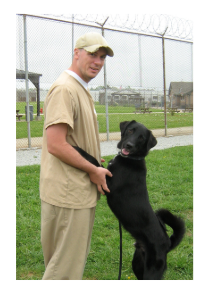
The BOCC is considering bringing their kennels back to the jail and contracting with entities to allow animal care to satisfy court-ordered community service requirements.
Also, in Washington, there are programs that allow inmates to work with animals, care for them, train them, rehabilitate them, and rehome them. These programs have been wildly successful and beneficial to the community, the animals, and the inmates. There are many stories of inmates who have found a purpose greater than themselves, felt empathy, and built emotional connections, many for the first time in their lives.
One of the oldest inmate pet programs in the U.S. is the Prison Pet Partnership Program at Washington State Corrections Center for Women, launched in 1981. Inmates are taught to raise, socialize, and train puppies for service to people with disabilities. The program also serves as vocational training for inmates, who can earn certification in pet training and grooming.
The commissioners are evaluating all of their options. They fully understand that animal control is a necessary service that must be provided. They are seeking a balanced, efficient, cost-effective solution that benefits taxpayers and animals while satisfying the county’s legal obligations.
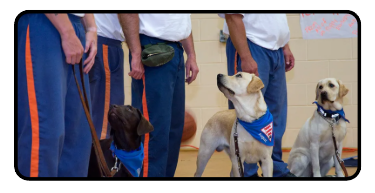
Local foster care providers have contacted the commissioners and may be able to provide longer-term care for more difficult rehab cases.
With HSSW, the question is this: do we head off these costs now and operate our own sheltering program, even though we know there will be bumps in the road? Or do we accept that HSSW is the only one that can provide the services, bite the bullet, and pay whatever they demand from now until eternity?
Call the Cowlitz County Sheriff’s Office, Animal Control at 360-577-3092, option #7
Connect with Cowlitz County Animal Control on Facebook