

Cowlitz County, WA – Superior Court Judge Michael Evans gave impassioned testimony at the County Commissioners’ meeting on December 9, 2025. He made it very clear that if the budget cuts are approved as proposed, he believed the court may have to file a lawsuit against the county.
Most of the county’s $260M budget is allocated to what Commissioner Rick Dahl refers to as the enterprise fund departments. All departments are overseen by the Cowlitz County Board of Commissioners, but enterprise departments are self-sufficient, meaning they do not rely on general fund allocations for their day-to-day operations.
For example:
- Building & Planning funds itself from the monies received from fees and permits
- Public Works funds its operations through road taxes
- Health & Human Services’ funding comes from fees it collects for services, such as septic system design evaluations and permitting, marriage licenses, and food handler permits, as well as state allocations.
The fund struggling to operate within its means is the $70-$80 million general fund.
The general fund supports these offices, along with many others:

- The Cowlitz County Sheriff’s Office
- District Court
- Superior Court
- Clerk of Superior Court
- Juvenile Court / Detention
- Auditor
- Assessor
- Treasurer
- Human Resources
- Corrections
- Information Technology
- Prosecuting Attorney
- Office of Public Defense
The general fund will spend more than what it brings in for 2025 and is projected to do the same for
2026 & 2027.
| Year | Projected Receivables | Projected Expenditures |
| 2025 | $63M | $77.7M |
| 2026 | $62M | $74.6M |
| 2027 | $62M | $80.2M |

“Our finance director has been beating the drum for years,” said Commissioner Dahl, “she’s been telling all of us that this day is coming, and now it’s here.”
Dahl continued, “People aren’t coming in for services; they’re coming in because we’ve told them they have to. Our number one responsibility is to protect the freedoms and rights of the people who live in our community, and part of that is staying out of their pocketbooks. Our core responsibility (as commissioners) is safety and infrastructure.”
“The rules and regulations have gotten out of control. For decades, we’ve passed rules, passed laws, passed fees, and told people they have to come to us before they can do anything. If you need a new roof, you have to call us; if you want to drive a dozer across your property, you have to call us. We need to cut costs and start walking some of that back.”
A constituent raised the mental health tax that was voted down last year. “When they (the voters) voted not to continue the tax, they knew they were eliminating the funding for drug court,” she said, “as commissioners, you kept it going for a year with opioid funds. But now that the year has passed, do we have a responsibility to carry out the voters’ wishes and start cutting these programs?”

Commissioner Steve Ferrell stressed his desire to find balance. “We need to figure out what minimum level of service is required.” He added, “If we cut back services too much, are we failing as commissioners?”
Ferrell went on to add that he went back and read what was written in the voter’s pamphlet, and he believes that the sentiment of no taxes overrode the reality of what the mental health tax funding was actually for. He also added that he’s been to drug court and he sees the family effect, which he referred to as the devastation and cost of supporting entire families, vs the cost of jailing an individual for an extended length of time. “Drug court dollars are tax dollars, jails are tax dollars,” he said, “we’re working hard to find that balance.”
Previous budgets have been balanced in a variety of ways, including using one-time funds, such as the COVID-era American Rescue Plan Act (ARPA) funds and Opioid Settlement funds, and deferring maintenance on county buildings. These one-time funds are gone, yet costs have risen substantially, and they are not coming down; plus, building maintenance cannot be put off any longer. The Hall of Justice needs major repairs; part of the facade has fallen off the front of the county building, and this maintenance cannot wait any longer.
The finance manager noted that they have been cutting expenses, and although she needed to verify the numbers, the county personnel had declined from 585 to 573 or maybe 574 employees.
Tax receipts for the general fund are sensitive to economic activity. If economic activity is strong, then the fund grows. If economic activity is flat or declining, the funds are flat or declining as well. Unfortunately, the latter is the scenario that the county finds itself in today. A lot of stagnation in our community is due to over-taxation and over-regulation mandated by Olympia. Businesses are bypassing our state and setting up shop elsewhere.
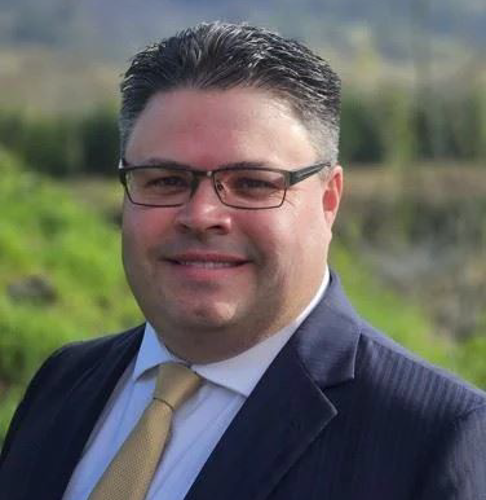
“We cannot just cut expenses, or continue to raise taxes and build a sustainable foundation for the future,” said Commissioner Rader, “Inspiring the entrepreneurial spirit in individuals who live here, encouraging growth through a thriving public sector, is how we grow ourselves out of this.”
Commissioner Rader said he’s also interested in exploring ways to ease the pressure on the general fund by making more entities self-sufficient. For example, the Expo Center and mental health services. He’s trying to find ways to bring behavioral health services to our community and ease the pressure on the Sheriff’s budget to provide them.
It’s not only the county that’s facing this scenario, either. All the municipalities and the taxpayers are feeling the crunch. As incomes and tax receipts have remained flat, expenses have continued to rise. This year alone, the cost of providing insurance for the county employees has skyrocketed by $800,000. Inflation has put significant pressure on wages, basic supplies, services, and operations. Additionally, mandates from legislation passed in Olympia and court rulings are driving up costs without any offsets.
Operations at the jail are another example; the people who used to run it have pulled out of Washington State, and the new provider wants over $1M more per year. The daily rate to house an inmate has increased by 13%, from $95.80 to $107.55. The hike means additional costs to the county and cities in booking and sentencing people. The jail typically houses 165 to 175 inmates at any given time, but has 300 beds available.
One constituent asked about the Juvenile Hall; we’re spending millions on it every year, but it only averages 10 offenders a month. Unfortunately, operating a juvenile facility is mandated by the state. We have to have one, so there’s not much that can be done about it: the state mandates it, the county has to pay for it, including the building and staffing, plus, housing juveniles has its own set of regulations and added costs.
The proposed cuts for each department range from 5% to 24%.
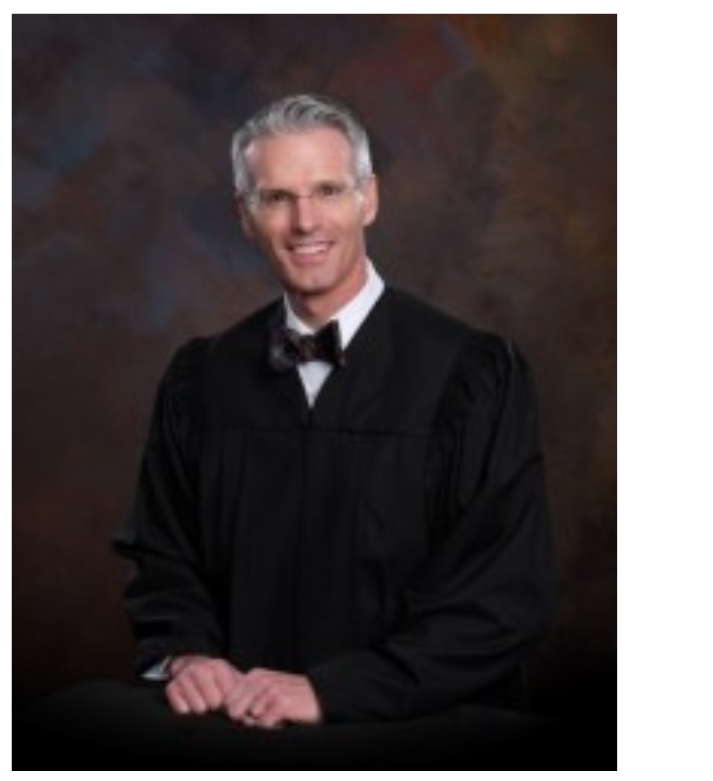
Superior Court Judge Michael Evans said, “Cutting 24% makes him question the county’s commitment to justice itself. The Constitution establishes the judicial branch alongside the legislative and executive as a coequal branch of government. The board may set the court’s overall budget, but it cannot dictate which judicial functions survive or impose specific cuts such as those suggested for the drug court or juvenile probation and detention.”
Evans went on to add, “The Constitution does not permit one branch to cripple another by withdrawing the very means by which its duties are carried out. If a 24% reduction is enacted, the court will be unable to fulfill its Constitutional obligations. At that point, the judiciary may be required to invoke its Constitutional authority to secure adequate funding. No one in this room wishes to see scarce public resources spent on litigating the basic principle that a functioning justice system must be funded at a level that allows it to function. Nor do any of us desire conflict between branches of government, but neither can we stand idle while justice is dismantled.” Justice Evans finished his statement with, “I urge the board to consider not only the cost of funding justice, but the far greater cost of failing to do so.”
A constituent followed up Judge Evans’ testimony by saying that he appreciates the previous speaker, and would like to remind everyone that the judicial branch, both state and federal, has imposed significant demands on the public that are not representative of the public’s wishes in many instances.
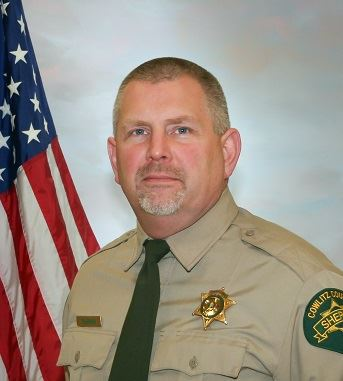
Cowlitz County Sheriff Brad Thurman thanked the commissioners for their help over the last three to four years. He said his department has restored five deputy positions and is now back to staffing levels from 2008, when the previous significant downturn occurred. At that time, they lost seven civilian positions in court security and one deputy.
His concern during this downturn is that he based his personnel decisions on meetings that were held from June through September. He thought there was a clear path forward, and he just hired three new deputies who started the academy yesterday (Monday, December 8, 2025, one day before this meeting).
To complicate the matter, the peripheral positions, such as animal control, have been brought into the Sheriff’s office because of the Humane Society’s situation. Plus, the Humane Society of SW Washington is more than doubling its rates from $111,000 to $225,000 this year. The court security function they provide is approaching $600,000 per year. These are out of the department’s control. What is under their control is personnel, and, by his calculations, a $1.1M cut would mean 7 to 8 deputies, with the first ones to go being the new hires. The Sheriff said, “It would be unfortunate to pull the rug out from under them.”
He summed up his comments by noting that there are ideas such as furloughs and retirement buyouts for senior staff that haven’t been worked through yet. He added that he believes there’s a way to work through this while maintaining services and staying fiscally responsible.
The commissioners looked into approving a one-year budget and forming a committee after the first of the year to examine possible cuts and costs. By the next day, after reviewing the RCWs, WACs, and county policy, it was determined that a one-year budget was not an option. By law, they cannot run a deficit, so they will have to make the numbers work, approve a budget, and amend it along the way. Even though the one-year budget is unworkable, the commissioners seem committed to forming the committee.
Next meeting:
- Tuesday, December 16, 2025
- 9 AM
- Cowlitz County Administration Building
- 207 4th Avenue N
- Commissioner Hearing Room
- Kelso, WA




Very difficult situation.
Years ago Walt Barham, Longview City manager, was faced with a similar dilemma. So he asked departments to either cut staff or reduce wages. They all chose reduced wages.
I wonder what all those court fines and fees go towards if not providing self funding for the courts? In a typical criminal calendar docket day the courts impose fines and fees in the range of $600,000.00. (Tuesday, Wednesday and Thursday only.) I am aware people do not always pay their court fines or fees. I wonder what the amount collected is?