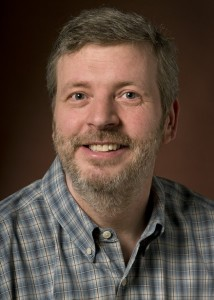
United States Court of Appeals for the Ninth Circuit – Stuart Reges is a Professorin the Paul G. Allen School of Computer Science & Engineering at the University of Washington (UW), where he joined the faculty in 2004. Reges v. Cauce is a First Amendment lawsuit filed by Professor Reges against UW President Ana Mari Cauce and other university officials. The case centers on Reges’s inclusion of a satirical land acknowledgment statement in his course syllabus, which UW administrators deemed offensive, leading to investigations, reprimands, and other actions that Reges alleged constituted retaliation and viewpoint discrimination.
“Recognizing that debate and disagreement are hallmarks of higher education, the panel held that UW violated the First Amendment in taking adverse action against Reges based on his view on a matter of public concern.”
United States Court of Appeals for the Ninth Circuit – Page 2, Opinion Filed December 19, 2025
Background and Incident
In 2020–2021, UW encouraged faculty to include an official Indigenous land acknowledgment in their syllabi. The recommended statement was: “The University of Washington acknowledges the Coast Salish peoples of this land, the land which touches the shared waters of all tribes and bands within the Suquamish, Tulalip, and Muckleshoot nations.”
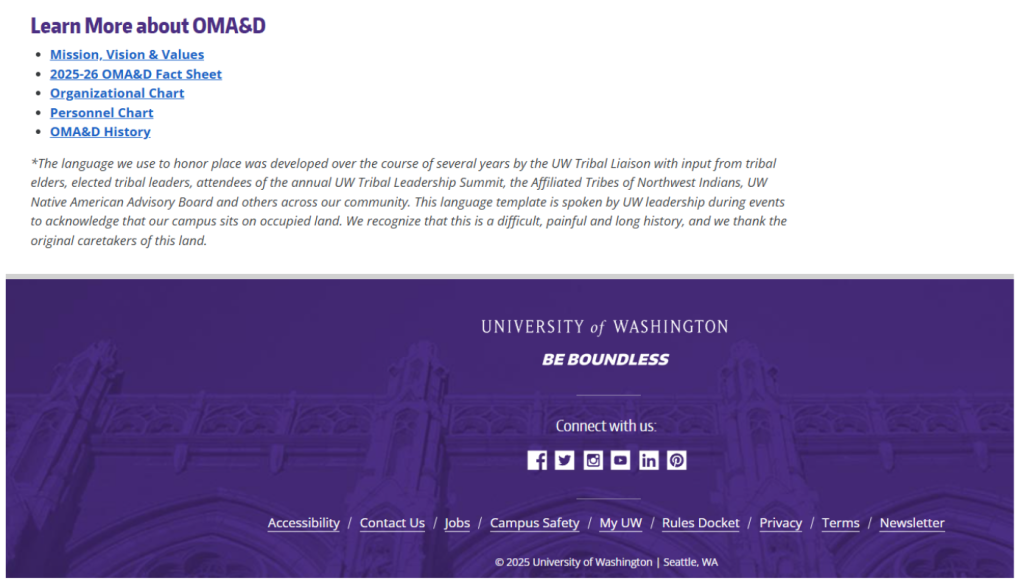
On their web page, they explain their suggested language template should be spoken by UW leadership during events “to acknowledge that our campus sits on occupied land.”
Reges opposed the land acknowledgment, viewing it as a performative political statement tied to diversity, equity, and inclusion initiatives. He also disputed their historical accuracy, arguing that much of the land was undeveloped forest.
On January 3, 2022, for his Winter quarter CSE 143 course, Reges added his own statement: “I acknowledge that by the labor theory of property, the Coast Salish people can claim historical ownership of almost none of the land currently occupied by the University of Washington.” (This referenced John Locke’s theory that property rights arise from labor invested in land.)
The statement prompted complaints from students and staff. Some described it as offensive, inflammatory, and making Native students feel unsafe or despised. UW administrators labeled it “offensive” and “inappropriate.”
University Response:
UW removed the statement from the online syllabus without Reges’s consent.
Created a “shadow” or parallel course (taught by another instructor at the same time), allowing students to transfer; about one-third did.
Launched a harassment investigation under UW’s nondiscrimination policy, which prohibits “unacceptable” or “inappropriate” comments.
Issued a formal reprimand and threatened further discipline.
Lawsuit History:
July 13, 2022: Reges, represented by the Foundation for Individual Rights and Expression (FIRE), filed suit in the U.S. District Court for the Western District of Washington. Claims included First Amendment retaliation, viewpoint discrimination, and facial challenges to UW’s policy as vague and overbroad.
May 3, 2024: District Judge John H. Chun granted summary judgment to UW, ruling the speech caused disruption, outweighing Reges’s interests under Pickering v. Board of Education (balancing public employee speech rights against employer interests), and that the policy was constitutional with a limiting construction.
June 4, 2024: Reges appealed to the Ninth Circuit (Case No. 24-3518).
May 15, 2025: Oral arguments heard before Judges Sidney R. Thomas, Milan D. Smith Jr., and Daniel A. Bress.
December 19, 2025: In a 2-1 decision (opinion by Judge Bress, with partial concurrence and partial dissent by Judge Thomas), the Ninth Circuit reversed the district court and remanded for further proceedings.
Key Holdings from the Ninth Circuit Decision (December 19, 2025)
As-Applied Claims (Retaliation and Viewpoint Discrimination): Reversed summary judgment for UW. Reges’s statement was protected speech on a matter of public concern in an academic context. (Heckler’s Veto)-Disruption from student complaints and disagreement does not outweigh First Amendment interests, especially since UW encouraged land acknowledgments in syllabi. The court found evidence of viewpoint discrimination because the actions targeted Reges’s dissenting views.
Facial Challenge to Policy: Reversed dismissal. The district court’s narrowing construction of “unacceptable or inappropriate” was improper; remanded for reconsideration without it.
The ruling is seen as a significant victory for faculty academic freedom, emphasizing that public universities cannot compel or punish faculty members for ideological beliefs on controversial issues.
The Constitution was founded to restrict the actions of the state. The University of Washington is a state-owned university, and the Constitution protects Reges’s free speech; the university cannot limit his speech on a public policy debate. They can stop him from speaking publicly on private matters, such as a student’s performance, but not on a public policy position, which the court clearly ruled is a public policy position.
How will this equate to our community if a teacher or student speaks out about the transgender mandates from OSPI? We’ll have to wait and see, as the ruling just came down on Friday, Dec. 19, 2025.




Thank you to the Professor for being Factful, Truthful and standing up for AMERICA!!