
Who’s Behind the Curtain:
When we look at who’s behind the effort to pass SB 5974, it becomes clear that it is a well-organized, fully funded, and highly focused campaign by activists emboldened by the Black Lives Matter movement.
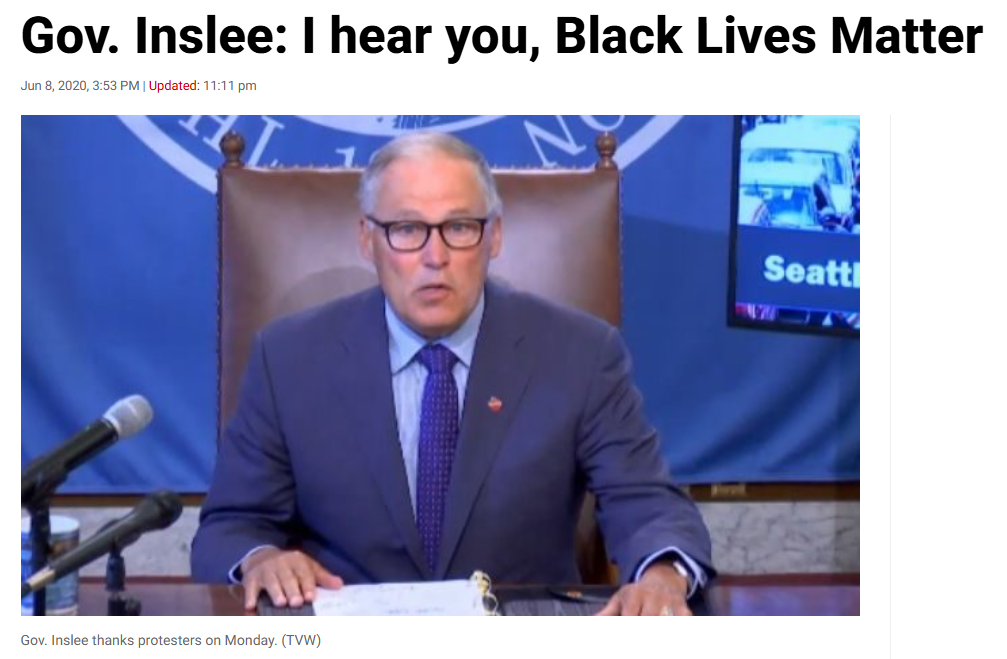
The ultimate goal appears to be to gain control of Washington’s law enforcement infrastructure from the inside. The efforts began as early as 2018 with the passage of Initiative 940, and maybe even earlier. After George Floyd’s death, the activists gained momentum and official political support from Governor Inslee. Control over the local sheriff’s offices through SB 5974 appears to be the last piece of the puzzle.
“The same people who helped Governor Inslee craft and pass E2SSB 5051, the legislation that changed the makeup of the Board at the Washington Criminal Justice Training Commission (CJTC), are the very same people who now sit on its board – it is they who are working to pass SB 5974 into law.”
– Dawn Courtney, Citizen Journalist
SB 5974 is perceived by many as a ploy to take control of local county sheriff offices. It makes one wonder who is behind this and why. The why is easy to define – Olympia wants control – it’s who they are, it’s what they do – and it comes as no surprise.
The who, however, remained a mystery, so Cowlitz Regional News dug into the question and identified the CJTC board. If SB 5974 passes, the CJTC Board of Commissioners (all appointed by the Governor) would have more control over the duly elected sheriffs than the voters.
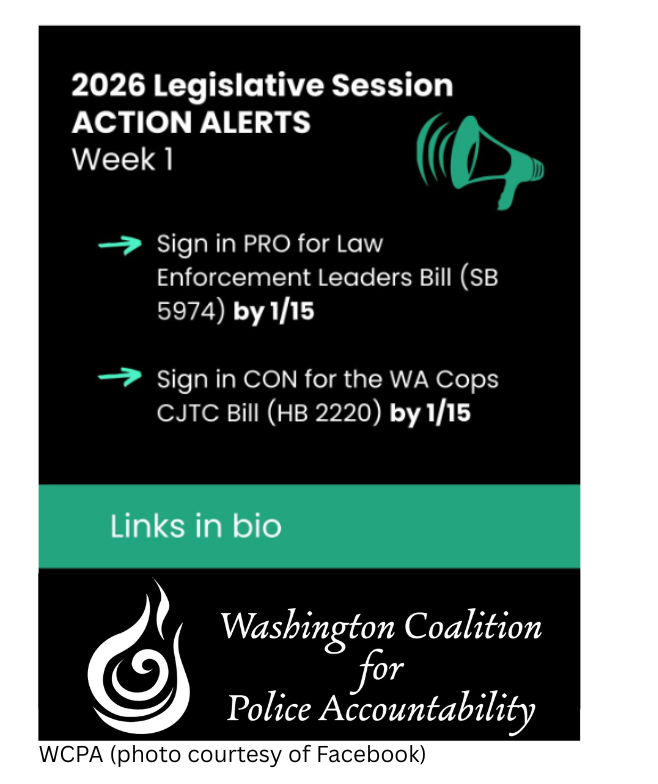
You can see from the Washington Coalition for Police Accountability’s Facebook post that they are actively working to pass SB 5974.
What the advertisement fails to mention is that the coalition’s President, Sonia Joseph; Treasurer, Nickeia Hunter; Board Member, Annalesa Thomas; Advisory Committee Member, Kurtis Robinson; and Past Vice-Chair, Timothy Reynon, also serve as Commissioners on the Washington State Criminal Justice Training Commission (CJTC) Board. They have a vested interest and a lot to gain if SB 5974 becomes law.
…so what is the CJTC, who are the board members, and how are they connected?
The Washington State Criminal Justice Training Commission (CJTC) was established in 1974 by legislation codified in RCW 43.101, specifically RCW 43.101.020, which defined its purpose.
This law created a state-level body to set standards and provide programs for criminal justice personnel, including peace officers and, later, corrections officers.
Initially, it focused on adopting rules for curriculum and training at approved facilities rather than directly providing the services themselves.
That changed in 1977 when its charter was expanded, and the commission began providing mandatory basic training for peace officers, along with the facilities, supplies, and support. This marked a shift toward the commission operating its own academies and an end to privately or locally owned facilities operating under government oversight.
Washington is one of two states where a single commission both sets standards and directly delivers academy training (West Virginia is the other state on par with Washington’s highly centralized system).
The Washington State Criminal Justice Training Commission (CJTC) sets standards, certifies/decertifies officers, and runs the statewide training academies.
The Washington State Patrol (WSP) is the only exception, as it operates its own program.

In 2021, legislation shifted the Board of Commissioners’ membership away from its historical structure of a law enforcement-led majority.
This change was part of a broader package of reforms passed by the legislature in response to public outcry over police shootings, including local high-profile incidents and the Black Lives Matter (BLM) movement following the death of George Floyd.
Specifically:
- E2SSB 5051 (Engrossed Second Substitute Senate Bill 5051, also known as the police decertification and accountability bill) was the key legislation that restructured the commission.
- It increased the total membership from 16 to 21.
- It reduced the proportion of law enforcement representatives and added civilian/community seats, with geographical and diversity requirements.
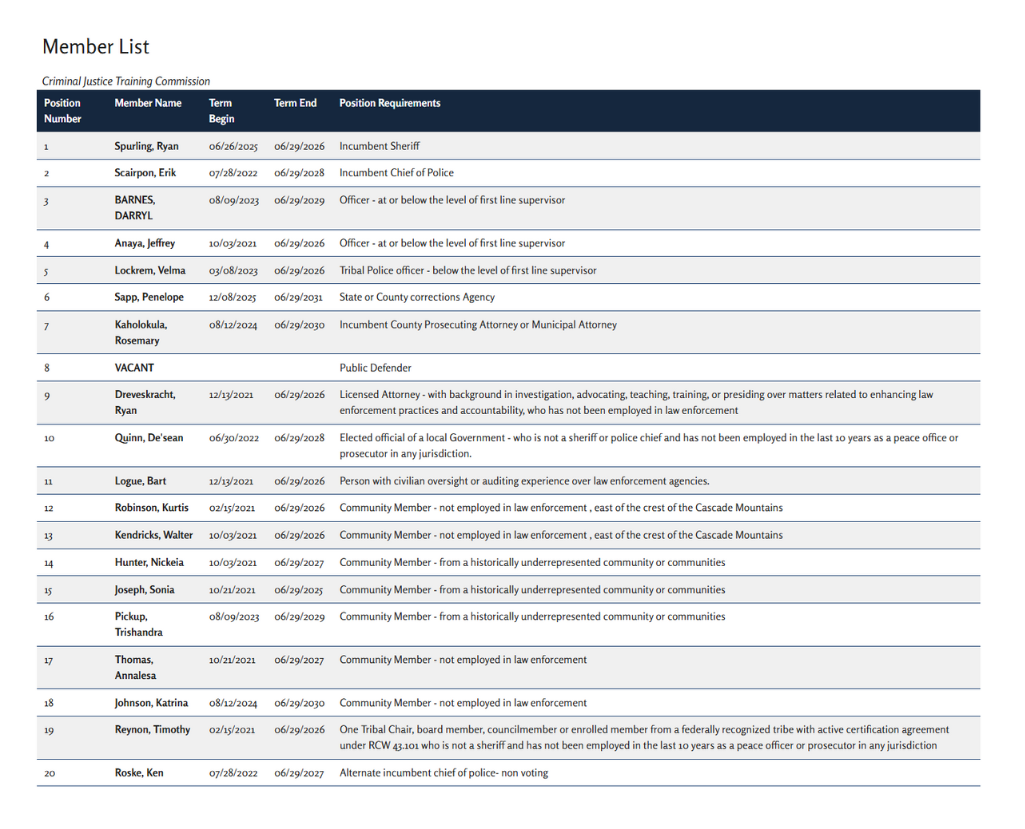
- There are currently 20 board members. Six are law enforcement, three are attorneys, one is an elected official, nine are civilians, with one attorney seat currently vacant.
Since 2021, the commission has been led by a non-law-enforcement/civilian majority.
“Almost all of the citizen commissioners who serve on the CJTC board have had someone close to them killed by an officer in the line of duty. That is a terrible thing … but it’s concerning that there is not one citizen commissioner that represents the thousands of people who have been saved by an officer’s actions.” ~Concerned Cowlitz County Citizen
E2SSB 5051 was signed into law by Governor Inslee, with most provisions taking effect on July 25, 2021.

- There were many major police reform bills passed in the 2021 session, including measures that expanded decertification powers, banned chokeholds, curtailed pursuits, created independent investigations, and set use-of-force standards.
- Advocacy groups like the Washington Coalition for Police Accountability (WCPA) played a key role in pushing for a reduction in law enforcement dominance over training, certification, and investigation standards.
- Current RCW 43.101.030 (as amended by E2SSB 5051) reflects this structure: of the 20 members, law-enforcement-specific seats (sheriff, chief, officers, corrections, prosecutor) were reduced to six seats, while community members (most of them activists) now make up the majority.
Membership Categories (Post-2021)
Governor Inslee was fully engaged as he appointed Black Lives Matter activists to the board.
“This commission has a lot of diversity in the modern sense of the word – but it does not have any diversity of thought, and that is dangerous for officers, the public, and the Constitution that both the officers and the commissioners have sworn to uphold.” ~Concerned Cowlitz County Citizen
Before we delve into the Citizen Commissioners let’s look at who the top executives are:
Monica Hunter-Alexander made history as the first African American woman to be promoted to sergeant, lieutenant, and captain in the Washington State Patrol’s (WSP) history. In June 2021, she was appointed as CJTC’s Executive Director by then-Governor Inslee.
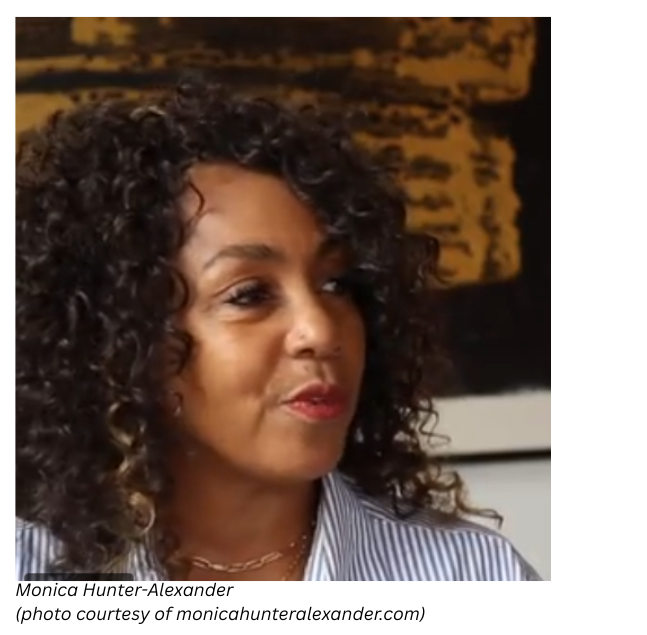
In 2015, Alexander became the captain in charge of the patrol’s government and media relations division. In that role, she was the face of the WSP at the Capitol. She met with lawmakers to advocate for the agency’s needs – including higher trooper pay to stem a tide of retirements and transfers to other agencies. In 2016, the Legislature approved double-digit pay increases for the state patrol.
Alexander also worked closely with state lawmakers on high-profile issues like untested rape kits and the issue of missing and murdered indigenous women.
Hunter-Alexander has announced her retirement, effective March 31, 2026. On January 26, 2026, Senate Resolution 8667 was unanimously adopted to recognize her decades of public service and leadership in criminal justice. Her book ‘Justice, Peace, and the Future of the Police’ is available on Amazon.
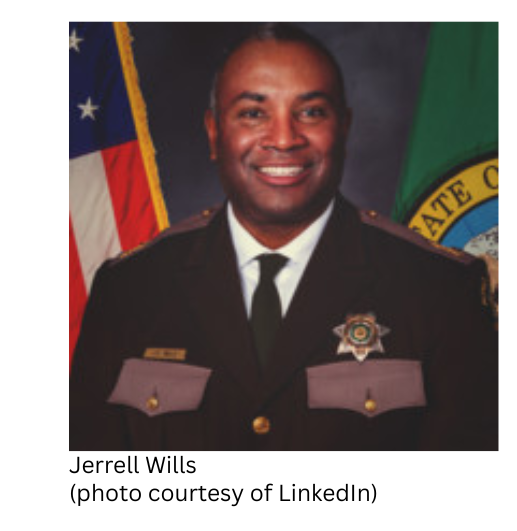
Jerrell Wills, Deputy Director and second-in-command, is a retired Criminal Investigations Division Chief from the King County Sheriff’s Office, where he served for over 30 years. His roles included Precinct Commander/Major, and he oversaw major crimes, special operations, and complex investigations.
As Deputy Director, he has contributed to major reforms, including implementing de-escalation and mental health and violence de-escalation training, as well as use-of-force training.
Now that we know how the commission’s board is structured and who the top executives are, we will focus on the civilians who serve on the commission for the remainder of the article. They are the key, and they would have more authority over local sheriffs than voters would under SB 5974 if it becomes law.
How do the civilian commissioners know each other outside of the CJTC?
| CJTC Citizen Commissioners (individuals bio below) | Are They Connected outside of CJTC? | How Are They Connected Con’t: |
| Sonia Joseph, Nickeia Hunter, Annalesa Thomas, Kurtis Robinson & Timothy Reynon | In WA SOS records, Joseph, Hunter & Thomas are listed as Governors of the WA Coalition for Police Accountability (WCPA). Joseph – President Hunter – Treasurer Thomas – Board Member Robinson – Advisory Committee Reynon – Past Vice Chair | Kurtis Robinson & Nickeia Hunter are active in the NAACP. Robinson – Past President and Current 3rd Vice President of the Spokane Chapter. Hunter – Past Vice-Chair, and intermittent chair of the Legal Redress Committee, Vancouver, WA Chapter. |
| Kurtis Robinson & Walter Kendricks | Both men are from Spokane – there are many local News reports of them working together through Kendrick’s work as a pastor, and Robinson’s work with the NAACP | |
| Trishandra Pickup, Sonia Joseph, Nickeia Hunter, Annalesa Thomas, & Kurtis Robinson | Pickup is quoted in news reports as saying she works closely with the WA Coalition for Police Accountability | |
| Katrina Johnson, Walter Kendricks, & Timothy Reynon | Johnson, Kendricks & Reynon served on the Governor’s Task Force on Independent Investigations of Police Use of Force. The task force was convened in June 2020, at the height of the Black Lives Matter movement, and before the CJTC Board was restructured. The result of the task force was the legislation that led to the formation of the Washington State Office of Independent Investigations (OII) | |
| Katrina Johnson, Kurtis Robinson & Timothy Reynon | According to her LinkedIn profile, Johnson served as the Black Lives Matter Washington (BLM-WA) Executive Director from Aug 2024 to October 2025. She worked directly with former Seahawks Defensive End Michael Bennett, a three-time Pro Bowler, Pro Bowl MVP, Super Bowl Champion, and two-time NFC Champion, on BLM Projects. (click here to watch their June 16, 2020, interview together with Haymarket Books). | CRN could not find documentation that the three publicly served together anywhere other than CJTC. They all worked to pass the 2018 Law Enforcement Training and Community Safety Act (LETCSA), formerly known as Initiative-940, which was passed by WA Voters. |
- Annalesa Thomas has successfully had her son’s case reopened for investigation.
- Trishandra Pickup’s former partner, Stonechild Chiefstick’s case, is currently under review and may be reopened.
- Timothy Reynon was reportedly heavily impacted by the death of fellow tribe member Jacqueline Salyers. A Puyallup Tribe June 2023 news release claims ‘New Revelations in Homicide of Puyallup Tribal Member Jackie Salyers’. Under the new law, even if officers have been exonerated, old cases can be reopened and reviewed for criminal prosecutions if new information is brought forward. The Salyers’ case seems to be headed in that direction.
The Washington State Office of Independent Investigations (OII) was created by the State Legislature in 2021. Katrina Johnson, Walter Kendricks, & Timothy Reynon were all members of the Governor’s Task Force on Independent Investigations of Police Use of Force and helped craft the legislation that created the OII which is the catalyst to reopen formerly closed investigations.
The OII is described as a first-in-the-nation model for statewide civilian-led oversight of police investigations into the use of deadly force. The legislation’s passage was lauded by the WA Coalition for Police Accountability(WCPA), which includes Sonia Joseph, Nickeia Hunter, Annalesa Thomas, Kurtis Robinson, and Timothy Reynon all of whom serve or have served on the board. Joseph is the President, Hunter is the Treasurer, Thomas is a board member, Robinson serves on the advisory committee, and Reynon is a past Vice-chair.
It is through OII that Annalesa Thomas was able to have her son’s case reopened, period news reports indicate she wants the officer who shot her son sent to prison.
The first (and only) officer to be convicted of murder under the new law:
- Jeffrey Nelson, a former Auburn Police Department officer, became the first officer in state history convicted of murder for an on-duty killing under Initiative-940 (or the 2018 Law Enforcement Training and Community Safety Act, or LETCSA) that Katrina Johnson, Kurtis Robinson, and Timothy Reynon worked to get passed by the voters.
- The Case was the 2019 Shooting of Jesse Sarey. On May 31, 2019, Nelson responded to a report of disorderly conduct outside a convenience/grocery store involving Jesse Sarey, a 26-year-old homeless man reportedly with mental health issues.
- When he tried to arrest Sarey, a struggle ensued, and Nelson shot Sarey two times. Nelson said it was self-defense, the jury disagreed, and found him guilty. On January 23, 2025, just one year ago, the judge presiding over the case sentenced Nelson to 16 years and eight months for the second-degree murder charge, and 10 years and three months for the first-degree assault charge. The sentences will run concurrently, and Nelson has been transferred to another state for his own safety.
- https://youtu.be/Th65iln1xWc?si=qLixT-mSZgGt7G9M
Individuals Serving On the CJTC Board Without a Law Enforcement Background:
Sonia Joseph, Community Member – from a historically underrepresented community or communities: Term Expires: 06/29/2025 (Her term says expired, but she’s still officially listed on the CJTC website as an active commissioner as of this writing, and phone calls and emails were not returned to clarify).
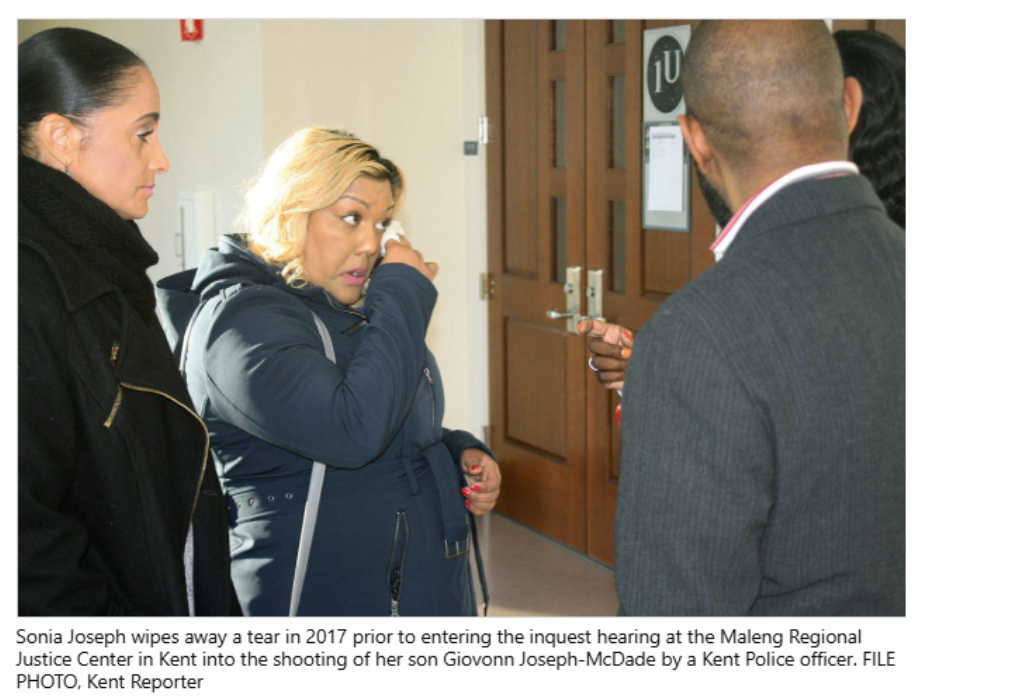
Joseph is a prominent advocate for police accountability and criminal justice reform, motivated by the 2017 fatal shooting of her unarmed son, Giovonn (Gio) Joseph-McDade, a 20-year-old Black man, by a Kent Police Department officer during a traffic-related stop/low-speed chase.
A 2021 article in the Kent Reporter stated that the officer was standing in front of Joseph-McDade’s car when he accelerated, and the officer shot him three times through the windshield.
The family settled a wrongful death lawsuit against the city for $4.4 million.
Joseph’s key roles and affiliations:
- Founder and Current Board President of the Washington Coalition for Police Accountability (WCPA)
- She has been instrumental in supporting and testifying for post-2020 police reform legislation, including expansions to CJTC’s decertification authority (E2SSB 5051 in 2021, which expanded the authority and duties of CJTL to allow consideration of past misconduct even if not criminal or recent when evaluating cases of decertification)
- Seattle media has quoted her frustrations over officers “getting away with misconduct,” and the need for broader revocation powers beyond criminal thresholds.
- She has participated in public forums, legislative previews, and events with groups such as Disability Rights Washington and the League of Women Voters.
Annalesa Thomas – Community Member – not employed in law enforcement: Term Expires 06/29/2027
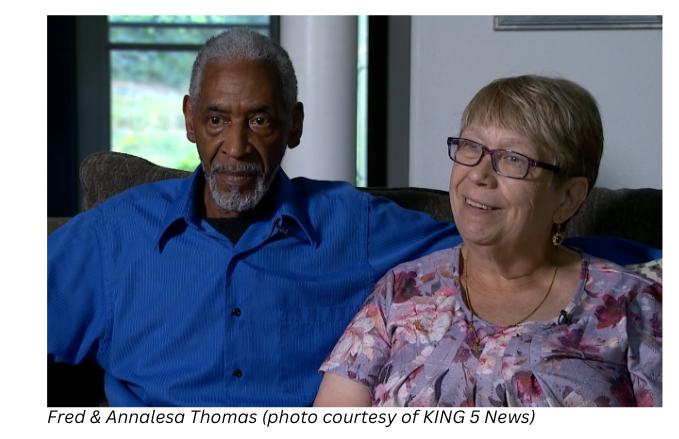
Thomas is a Tacoma-based advocate for police accountability and criminal justice reform. She became motivated by the 2013 fatal shooting of her unarmed son. Thomas called the police after a dispute with her son. After a four-hour standoff, Leonard Thomas was killed by a SWAT sniper in Fife, WA.
Leonard, who was Black, was killed with his child in his arms; a federal jury later found officers liable and awarded the family $15 million in a wrongful death suit.
The incident fueled her involvement in reforms, including Initiative 940 (the 2018 Law Enforcement Training and Community Safety Act, or LETCSA), which passed overwhelmingly and led to expanded de-escalation training, independent investigations of deadly force, and easier prosecution of officers in certain cases.
Thomas’ key roles and affiliations:
- Board member of the Washington Coalition for Police Accountability (WCPA).
- Involved in broader efforts around racial justice, use-of-force limits, officer certification/ decertification, and addressing backlogs in misconduct investigations.
- She has been quoted in the media as criticizing delays in implementing police reform, wanting stricter deadly-force standards, and highlighting the need to clear certification backlogs.
- In 2025, she requested that the WA State Office of Independent Investigations (OII) reopen a review of her son’s case under its Prior Investigation Review Program, which led to a referral for a potential prosecutorial investigation.
- Fred Thomas — Leonard Thomas’ father — is co-chair of the Washington State Office of Independent Investigation’s (OII) advisory board. A third party was hired to do the review because of the conflict of interest.
Trishandra Pickup – Community Member – from a historically underrepresented community or communities: Term Expires 06/29/2029
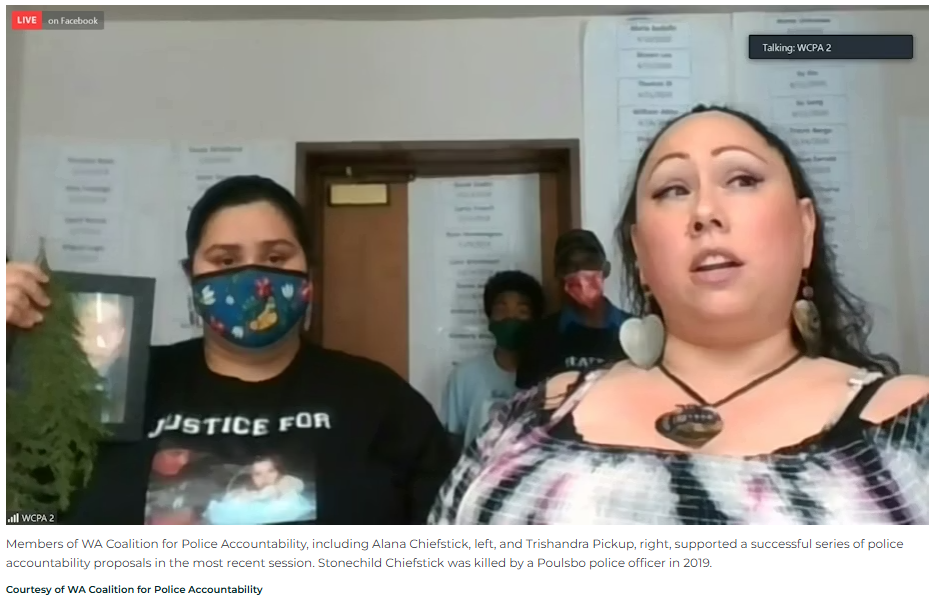
Pickup is a Poulsbo-based advocate for police accountability and reform, driven by the 2019 fatal shooting of her partner, Stonechild Chiefstick, by Poulsbo officers during a 4th of July event.
Chiefstick, who was Indigenous, had reportedly been threatening partygoers with a screwdriver at the public event. The city later settled a wrongful death lawsuit for $2 million in 2021. The incident has been a focal point in Pickup’s push for changes in use-of-force policies, investigations, and officer certifications / decertifications.
Pickup’s key roles and affiliations:
- Member of the Washington Coalition for Police Accountability (WCPA).
- Active supporter of post-2020 legislation, including expansions to the CJTC’s powers under laws like E2SSB 5051 (2021), which broadened decertification for misconduct that could harm public trust (even if not criminal), retroactive consideration of past offenses, and requirements for corrections officer certification.
- She has been quoted in national and local media on topics such as decertification, the expansion of revocation powers, the importance of community input in training and certification processes, and how public voices expose issues that agencies might ‘sweep under the rug.’
- In recent years, she has advocated for independent reviews, calling on the WA State Office of Independent Investigations (OII) to probe cases like Chiefstick’s more thoroughly and highlighting ongoing challenges in implementation.
Katrina Johnson – Community Member – not employed in law enforcement: Term Expires 06/29/2030
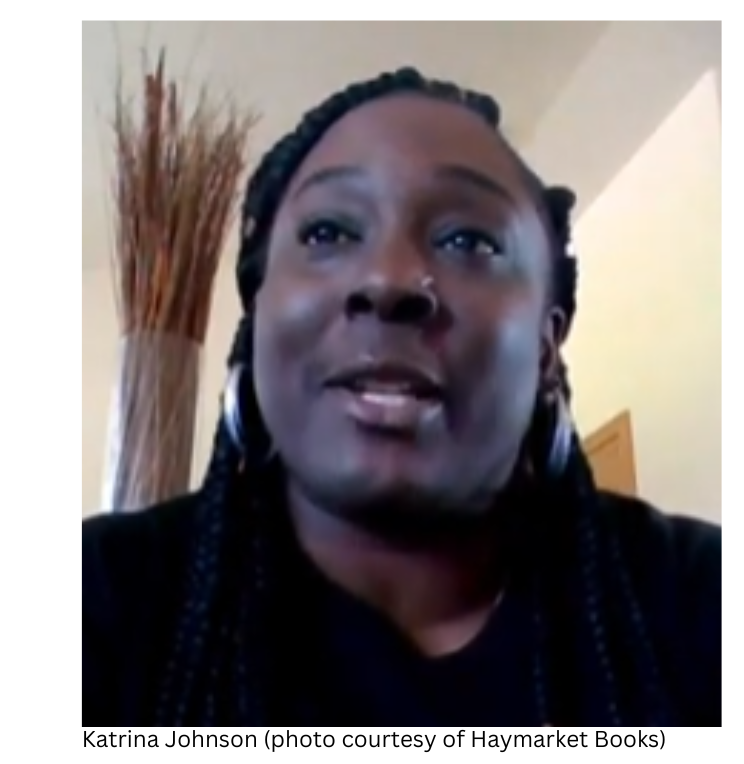
Johnson is a Tacoma-based advocate for police accountability and reform. She is the cousin of Charleena Lyles, a 30-year-old pregnant Black woman who was fatally shot by Seattle Police Officers in June 2017. She was known by the department to have mental health issues.
The incident sparked widespread protests, discussions on police use of force, mental health crisis response, and de-escalation training. No criminal charges were filed against the officers, though the case led to civil settlements and policy scrutiny.
The family filed a wrongful-death civil lawsuit (Lyles v. City of Seattle), and in late November 2021, the City of Seattle settled the lawsuit for $3.5 million.
Johnson’s key roles and affiliations:
- She was the Executive Director of Black Lives Matter Washington (BLM-WA) and Black Lives Matter Seattle King County (BLM-SKC) for Aug 2024 – Oct 2025, according to her LinkedIn profile. BLM now calls itself Puget Sound Sage
- On her LinkedIn Profile, she has herself listed as a Community Organizer and Social Justice Advocate.
- She is connected to groups advocating for reforms, including support for Initiative 940 (the 2018 Law Enforcement Training and Community Safety Act/LETCSA, which expanded de-escalation and mental health training and established a task force for independent investigations into deadly force).
- She has been quoted in the Seattle Times as favoring retroactive decertification rules allowing consideration of past misconduct in investigations; she has emphasized the need for better training, accountability beyond criminal thresholds, and community voices in oversight.
- As a commissioner, she actively participates in discussions on certification/decertification policies, bylaws updates, variance requests, complaint handling, and reforms.
Nickeia Hunter – Community Member – from a historically underrepresented community or communities: Term Expires 06/29/2027
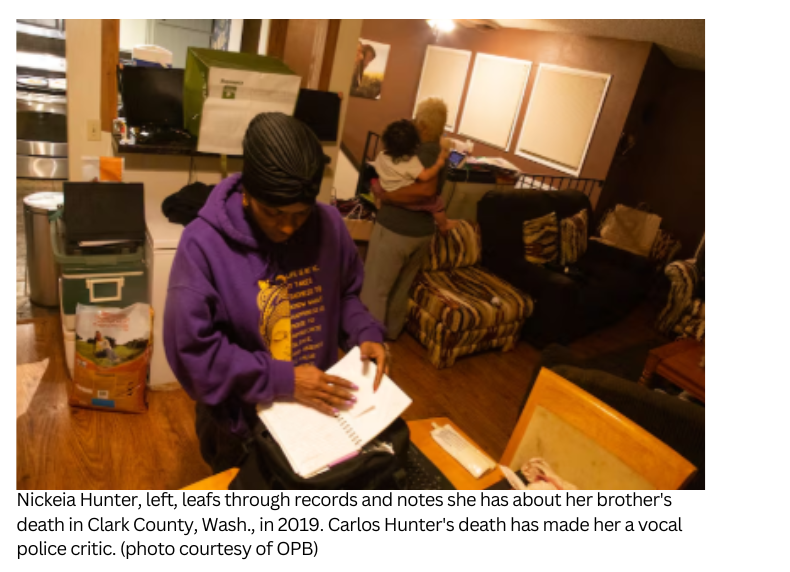
Hunter is a Vancouver-based civil rights leader, labor strategist, and prominent advocate for police accountability.
Hunter is the sister of Carlos Hunter, who was fatally shot by Vancouver Police Department officers in 2019. The officers pulled Mr. Hunter over to serve a search warrant when he allegedly reached for a gun that was recovered at the scene.
The incident prompted her to advocate for systemic changes, including de-escalation training, independent investigations, stronger penalties for misconduct, and alternatives such as co-response with mental health professionals.
Hunter’s key roles and affiliations:
- Reportedly, she has served as the Past Vice President of the NAACP Vancouver Chapter (and has also served as an intermittent chair of its Legal Redress Committee).
- Board Treasurer of the Washington Coalition for Police Accountability (WCPA).
- Appointed to the CJTC as part of post-2020 reform efforts, she has been involved in coalitions supporting bills like HB 1445 that address racial disparities in traffic stops. HB 2190, related to humanity and protections in policing, and expansions to CJTC’s decertification powers.
- She has testified at legislative hearings, participated in public forums with ACLU-WA, and advocated for stronger enforcement & reporting requirements under laws such as 2021 measures E2SSB 5051 and related measures.
Kurtis Robinson – Community Member – not employed in law enforcement, east of the crest of the Cascade Mountains: Term Expires 06/29/2026
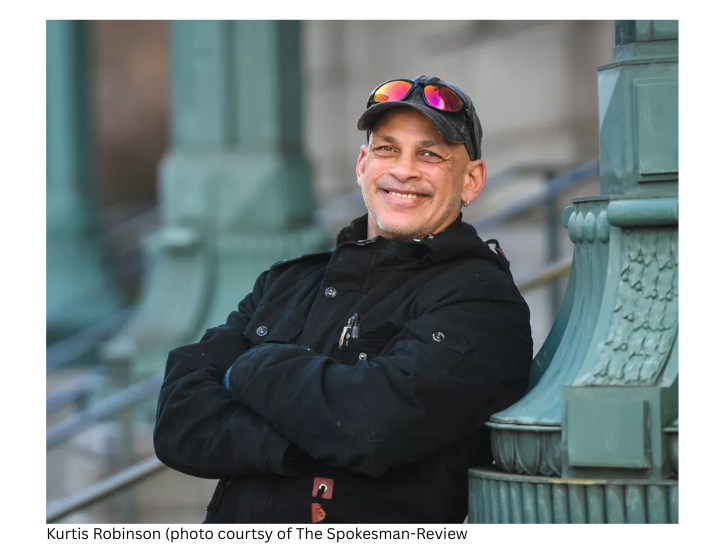
Robinson is a well-known Spokane-based activist for racial justice, criminal justice reform, and reentry support. There are numerous news articles and reports covering his many years of community organizing and activism.
Robinson’s key roles and affiliations:
- Executive Director and co-founder of the Revive Center for Returning Citizens (RCFRC), focused on empowering those impacted by the criminal justice system, advancing solutions to incarceration effects, and promoting racial justice.
- Past President (multiple terms) and current 3rd Vice President of the Spokane NAACP branch, and serves as their Criminal Justice Co-chair.
- Commissioner / Vice-Chair on the Spokane Human Rights Commission.
- Prior to his appointment to the commission, he worked on Initiative 940 (the 2018 Law Enforcement Training and Community Safety Act/LETCSA, which expanded de-escalation and mental health training and established independent investigations into the use of deadly force).
- Board member/secretary for Better Health Together; vice chair for Just Lead Washington; member of Front and Centered community council, and served on the 2019 Attorney General’s Hate Crimes Advisory Work Group.
- Robinson struggled with addiction and served time in prison for a failed strong-armed robbery in the 1980s.
- In 2019, Robinson and Spokane County Sheriff Ozzie Knezovich signed a memorandum of understanding to study racial equity at the Sheriff’s Office. The agreement called on the office to commission a third-party analysis of its culture and document arrests and uses of force broken down by race, gender, and location.
- In 2020, the NAACP and other organizations opposed the approval of a new contract with the Spokane Police Guild, arguing that it failed to hold officers accountable to the standards set by city law. The Spokane City Council unanimously rejected the contract.
- According to his LinkedIn profile, he describes himself as: A Formally Incarcerated, Multiracial Male, and has over 20 years of concurrent abstinence from drugs and alcohol. He is also the first openly justice-involved individual to serve as a Governor-appointed Commissioner to the Criminal Justice Training Commission for Washington State.
- Also on LinkedIn: The Revive Center and Our Revive Family of Organizations are committed to addressing and dismantling systemic racism and all other forms of oppression wherever possible. We are dedicated to educating ourselves, our clients, the community, and our partners on understanding structural, historical, and internalized oppression. We are committed to using race equity, anti-oppression, anti-racist, and pro-equity lenses in all we do. We understand that much of our legal, criminal justice, and carceral systems reinforce racialized structures, normalize racial segregation, and perpetuate oppressive, dehumanizing outcomes.
Walter Kendricks – Community Member – not employed in law enforcement, east of the crest of the Cascade Mountains: Term Expires 06/29/2026
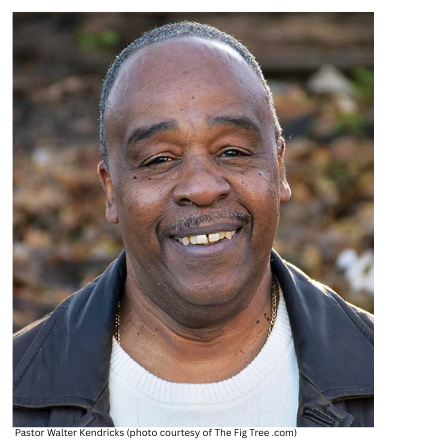
Kendrick is a Spokane-based pastor, community leader, and advocate for racial justice, police reform, and criminal justice equity. He serves as the Pastor of Morning Star Missionary Baptist Church. His advocacy focuses on systemic change, including police accountability, defunding/ reimagining policing, opposing mass incarceration, supporting “No New Jail” campaigns, and addressing racial disparities in the justice system.
Kendricks and Kurtis Robinson, both of Spokane, are closely associated, have co-signed open letters, participated in joint events, and appeared together at many advocacy projects.
Kendrick’s key roles and affiliations:
Eastern Washington Commissioner for the Governor’s Commission on African American Affairs, with a focuson health equity and community issues. Kendrick’s also served on the Governor’s Task Force on Independent Investigations of Police Use of Force, which led to the formation of the WA State Office of Independent Investigations.
- Involved with Spokane Community Against Racism (SCAR), where he has been a vocal advocate for police defunding and reform in the 2020 protests, active participant in calls for transparency and accountability.
- Participant in broader coalitions, such as Washington for Black Lives, and in events challenging police narratives.
- He has testified before legislative committees (such as the House Public Safety Committee in 2020 on police reform bills following the George Floyd protests), has pushed for bold actions on equity, and has spoken on topics including reimagining policing, ending unnecessary police shootings, and community-police relations.
- Quotes in the Spokesman-Review highlighted his frustration over slow reform progress.
De’Sean Quinn – elected official of a local Government, who is not a sheriff or police chief and has not been employed in the last 10 years as a peace officer or prosecutor. Term expires: 06/29/2028
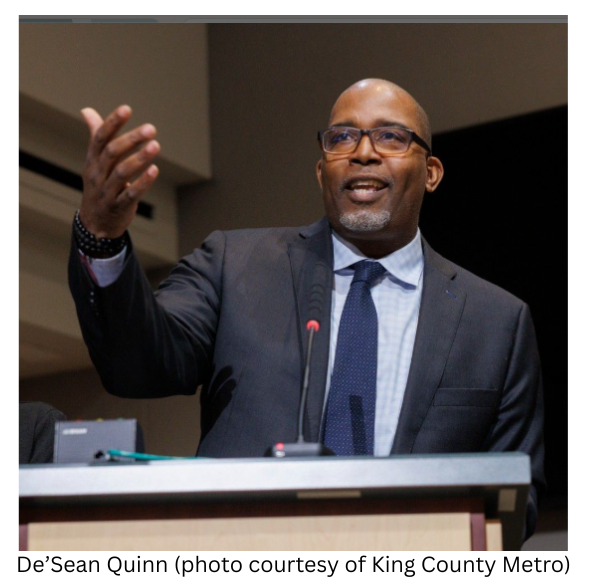
He has been a long-serving member and previously held leadership roles:
- Chair (elected by members and noted as the first African American chair).
- Vice Chair (prior to chairmanship).
Quinn’s key roles and affiliations:
- Served on the Tukwila City Council. Quinn started his service on the council in 2008. He focused on community equity, public safety, and partnerships.
- Appointed to King County Council District 5 in January 2025 (filling a vacancy left by Dave Upthegrove). He has emphasized historic investments in Black communities, budgeting equity, and collaborative governance. Quinn had to resign both his seat on the Tukwila City Council and his job at Metro to accept the temporary position. Quinn told the council he expected to return to both jobs at the end of his short stint on the county council.
- Previously worked at King County Metro Transit as Assistant General Manager of Partnerships and Strategy, with a focus on implementing equity-focused policies.
- Contributed to discussions on recruit removal for psychological red flags, certification/ decertification, training reforms (under LETCSA/I-940), bylaws, and policy updates.
- Praised leadership changes and expansions of community seats, which, in 2021, shifted the balance from majority law enforcement to a civilian community/non-law enforcement majority.
- Advocated for significant changes in police training culture, accountability, and community trust.
Bart Logue – person with civilian oversight or auditing experience over law enforcement agencies. Term expires: 06/29/2026
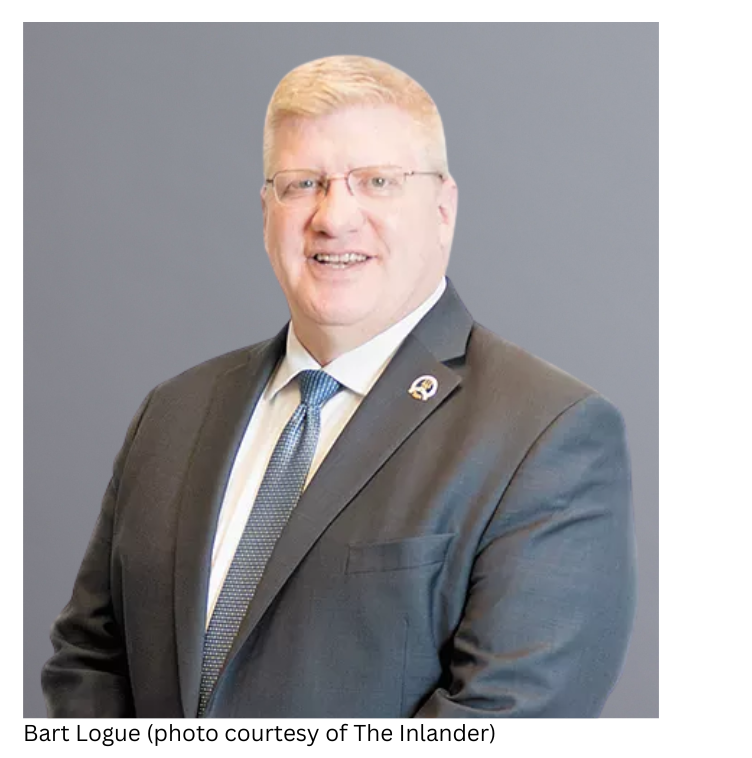
Logue has served as the Director of the Office of the Police Ombudsman for the City of Spokane since September 2016 (after initially serving as Interim Ombudsman for seven months). Logue, a former diplomat and Marine Corps provost marshal, the equivalent of a police chief, was selected after a 21-month search that began after Tim Burns left the job in January 2015.
In his civilian oversight role, he:
- Reviews and audits the Spokane Police Department (SPD) investigations, policies, and practices.
- Handles public complaints against officers.
- Promotes transparency, community trust, and accountability in policing.
- Issues reports, recommends policy changes, and testifies on oversight matters.
He has been a Certified Practitioner of Oversight through the National Association for Civilian Oversight of Law Enforcement (NACOLE) since 2019. He currently serves as Treasurer on NACOLE’s Board of Directors, contributing to national standards for civilian oversight of law enforcement.
In Sept. 2025, the media reported that Logue faced public scrutiny and an independent investigation related to his role as Spokane Ombudsman (allegations involving a consulting contract and complaint handling).
Timothy Reynon, – Tribal Chair, board member, councilmember, or enrolled member from a federally recognized tribe with an active certification agreement under RCW 43.101, who is not a sheriff and has not been employed in the last 10 years as a peace officer or prosecutor in any jurisdiction. Term Expires: 06/29/2026
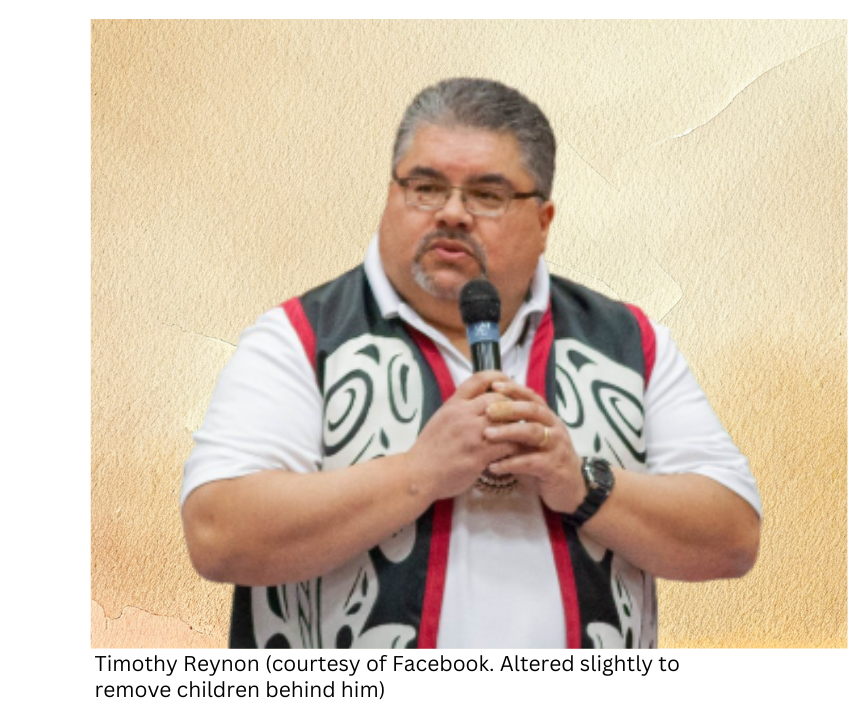
Reynon and the Puyallup Tribal Community were heavily impacted by the death of fellow tribal member Jackie Salyers. Jacqueline “Jackie” Salyers was a 32-year-old member of the Puyallup Tribe of Indians who was fatally shot by Tacoma Police Officers in January 2016.
Circumstances of the Incident
- Salyers was reported as sitting in the driver’s seat of a parked (and reportedly stolen) vehicle with her longtime partner/ boyfriend, Kenneth Wright (a fugitive felon with outstanding warrants and known to possess guns).
- The officers spotted Wright in the passenger seat and tried to execute the arrest warrant.
- According to the official police accounts, as officers approached the vehicle on foot, Salyers accelerated toward them, prompting Officer Campbell to open fire in self-defense, believing the car was being used as a weapon.
- Salyers was shot multiple times (including in the right arm, abdomen, left wrist/hand graze, and fatally in the head/right temple).
- She died from the wound to her head, as determined by Pierce County Medical Examiner Dr. Thomas Clark. An autopsy also revealed she had morphine and potentially lethal levels of other substances in her system, and she was pregnant at the time (a fact her family learned after her burial, leading to statements that “two people” were killed).
- Wright fled on foot and was apprehended weeks later; he was later incarcerated.
- A news release from the Puyallup Tribe, dated June 28, 2023, claims there are new revelations about her death.
Reynon is a tribal attorney who represents tribal perspectives on officer training, standards, and certification, including tribal officers, in a state with significant tribal law enforcement needs.
He has also served as Vice Chair of the commission. He is a government and management consultant/policy advisor with expertise in tribal affairs.
He has worked with the Governor’s Office of Indian Affairs (GOIA), focusing on policy, intergovernmental relations, and tribal-state coordination. His LinkedIn profile describes him as an accomplished HR leader and team builder with a background in government consulting, education from Brigham Young University, and a focus on Indian Affairs.
Reynon’s key roles and affiliations:
- Puyallup Tribal Member and former Tribal Councilman
- Tribal officer certification and training options (CJTC offers pathways for tribal agencies).
- Cross-jurisdictional collaboration (under PL 280 or tribal-state agreements).
- Culturally responsive policing, de-escalation, and community trust in tribal contexts.
- Contributes considerably to bylaws updates, public comment guidelines, hearing procedures, certification policies that prioritize investigations, complaint handling, WAC changes, variance requests, and training reform.
- Former Vice Chair of the Washington Coalition for Police Accountability (WCPA).
- Secretary for the Purpose Dignity Action (PDA) Board of Directors.
- Served on state task forces, including the Governor’s Task Force on Independent Investigations of Police Use of Force (2019) and the 2016 Joint Legislative Task Force on the Use of Deadly Force in Community Policing.
- Member of the Washington Bar Association (legal expert in Native American law).
- His background combines tribal governance experience, legal/policy expertise, and advocacy for justice reforms, making him a key voice for tribal perspectives on the CJTC.
- Director of the Governor’s Office of Indian Affairs (GOIA), appointed by Gov. Bob Ferguson in December 2024 (effective January 2025). In this position, he serves as the primary liaison between the Washington State government and the state’s 29 federally recognized tribes, with a focus on policy, intergovernmental relations, and tribal-state coordination.
- Prior to GOIA, he served as Tribal Relations Director for the City of Seattle’s Office of Intergovernmental Relations.
Timeline of Events:
- February 15, 2021: Kurtis Robinson and Timothy Reynon appointed to the Washington Criminal Justice Training Commission (CJTC) Board
- April 7, 2021: Persons Testifying (Appropriations) Fred Thomas, Washington Coalition for Police Accountability (WCPA) (In support of E2SSB 5051 – Engrossed Second Substitute Senate Bill 5051)
- May 18, 2021: E2SSB signed into law by Governor Jay Inslee
- July 25, 2021: E2SSB became effective. Shifted the Washington Criminal Justice Training Commission (CJTC) board from a majority law enforcement body to a majority community/civilian one
- June 14, 2022: Washington Coalition for Police Accountability (WCPA) officially formed with WA SOS
- Governors of WCPA on file with the WA Secretary of State & CJTC Board Members
- Sonia Joseph
- Nickeia Hunter
- Annalesa Thomas
Monica Hunter-Alexander & Kurtis Robinson returned phone calls or emails. Requests for comments or clarifications were not returned by the others mentioned in the article.