

Can the Blue Dog Democrats find a home in this day and age? Since the 2020 George Floyd riots, we’ve witnessed the far left side of the Democratic Party use the historical rules for radicals to advance their agenda. These rules come in many shapes and sizes, but for now, we’ll focus on the following concepts from Victor Davis Hanson:
- Take to the Streets
- Break Windows
- Attack History as Racist
- Surround Police Stations
- Block Highways
- Shut Down Campuses
The far left push and push and push – they exhaust the leadership and the electorate – and they’re using that leverage to yank the Democratic Party further to the left.
The far left is using the chaos they’ve created to force the old guard – Chuck Schumer, Nancy Pelosi, and Hakeem Jeffries to respond to them, and not the other way around.
Today, in the relentless and coordinated legacy media attacks, we’re seeing the mindset of the hard left play out in real time. They believe real power comes from taking to the streets, not from committee rooms, and if they can make life miserable enough for the average voter, in their mind, those voters will blame the right and beg for normalcy, even if that normalcy comes packaged in their far-left agenda. If we look at Cuba and Venezuela, we can easily see how those policies are working out for their populations. You could even point to the USSR, but it no longer exists.
As we watch this play out in real time, we also know that there is a large population, formerly known as the Blue Dog Democrats, that is horrified by the tactics and policies of the far left. They object to men in their daughters’ locker room, violent criminals left free to roam the streets, and unfettered illegal immigration changing the very fabric of their community.
The Blue Dog Democrats voted for Ronald Reagan and Donald Trump: they couldn’t have won the presidency without them. So who are these “Blue Dog” Democrats, what does the term really mean, and where are they today?

A “Blue Dog Democrat” was originally a member of the U.S. House of Representatives who belonged to the “Blue Dog Coalition“, a formal caucus of centrist/fiscally conservative Democrats. The term also came to include the voters who supported them. This group typically emphasizes:
- Fiscal responsibility and balanced budgets
- Deficit reduction
- Pay-as-you-go (PAYGO) rules
- Pro-business policies
- Often more moderate or conservative stances on social/cultural issues compared to the Progressive Democrats
- Strong support for national defense and rural interests
History & Name Origin
- Founded in 1995 after the 1994 Republican takeover of Congress
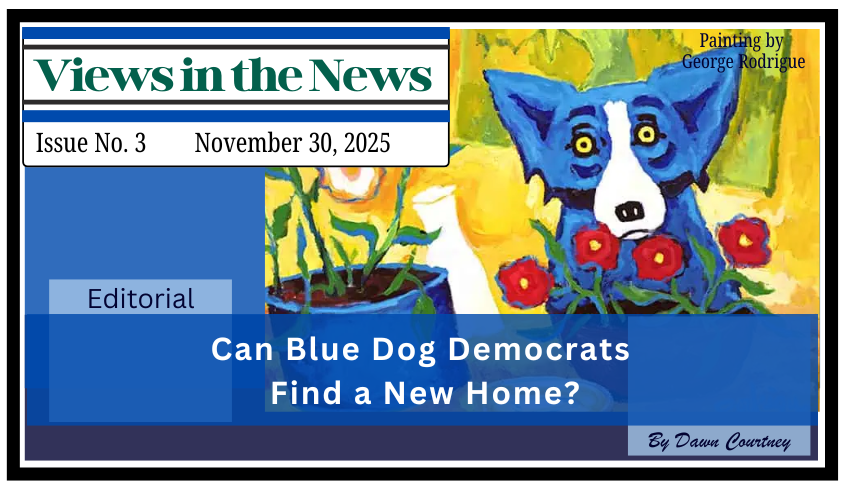
- The name “Blue Dog” comes from the phrase “choked blue” to describe Democrats being “choked blue” by extremists in the party, and from a series of paintings by Cajun artist George Rodrigue featuring a blue dog (symbolizing the members’ feeling “strangled” by liberal policies).
Key Characteristics
- Mostly represent rural, Southern, or swing districts
- Frequently vote across party lines on issues like spending, guns, trade, and taxes
- Tend to be more skeptical of large government programs or tax increases
- Often pro–Second Amendment, pro-life or moderate on abortion, and pro-military
The Blue Dog Democrats were the party of JFK and even Bill Clinton. By today’s standards, Clinton’s Welfare-to-Work policies fit this description, but now the Democratic Party is the Welfare-for-Life party. But does it always have to be that way?

Let me introduce you to Krist Novoselić, a Wahkiakum County Resident, who co-founded the band Nirvana and has had a decades-long career in political advocacy. In 1995, he helped form the Joint Artists and Music Promotions Political Action Committee (JAMPAC) and successfully combated Washington’s “Erotic Music Law” and “Teen Dance Ordinance.”
Novoselić seems to be a firm believer in the Democratic ideals. He reportedly joined the board of FairVote in 2005 and became board chair in 2008, a role he held for over a decade.
FairVote is a proponent of the Ranked Choice voting system, which reportedly helped Republican Alaska Senator Lisa Murkowski hold off her Republican primary challenger to win reelection in the third and final round of counting, when she was awarded most of the second-choice votes from Democrat Pat Chesbro’s voters.
According to PDC Reports, in 2016, he donated $11,000 to Carbon WA, a nonprofit advocacy organization focused on advancing climate policy, including net-zero carbon emissions and cap-and-trade policies. He also donated to the Washington Forward Party, which advocates for Ranked Choice Voting and calls both Defund the Police and Back the Blue extreme positions.
He’s also donated to numerous campaigns, including former Longview Senator Dean Takko, former Governor Christine Gregoire, and he donated $3,400 and $500 to Governor Bob Ferguson when he ran for Washington State Attorney General in 2012 and 2016, respectively.
He puts his money on the table for what he believes. PDC reports show that he’s donated over $20,000 to Cascade Party of Washington, which he founded in mid-2024. The Washington Secretary of State has recognized Cascade Party as a minor political party, allowing it to qualify candidates for the ballot.

The Daily News reported that Novoselić was in Longview on Saturday, November 22, 2025, at Roland Wines, and he spoke to a crowd of approximately 100 people about having a party that avoids the vitriol and extremes of the current system.
The Cascade Party platform was posted, and highlighted issues such as Housing, Public Safety, Accountable Governance, Agriculture, Environment, Energy, Health Care, Education, and Taxes.
Longview City Council member Angie Wean, Kelso City Councilman Jim Hill, and former State Senator Dean Takko were in attendance.
The big question for Cascade Party of Washington is: Can they attract enough Blue Dog Democrats to make a difference, or will they attract just enough to split the vote and advance the extremist candidates?
ABOUT GEORGE RODRIGUE
(1944-2013)
Born and raised in Cajun Country, Louisiana, U.S.A., artist George Rodrigue portrayed on his canvas what he feared was his dying heritage, including its land, people, traditions, and mythology. As he often explained, he sought to “graphically interpret the Cajun culture,” preserving it in the face of a progressive world.
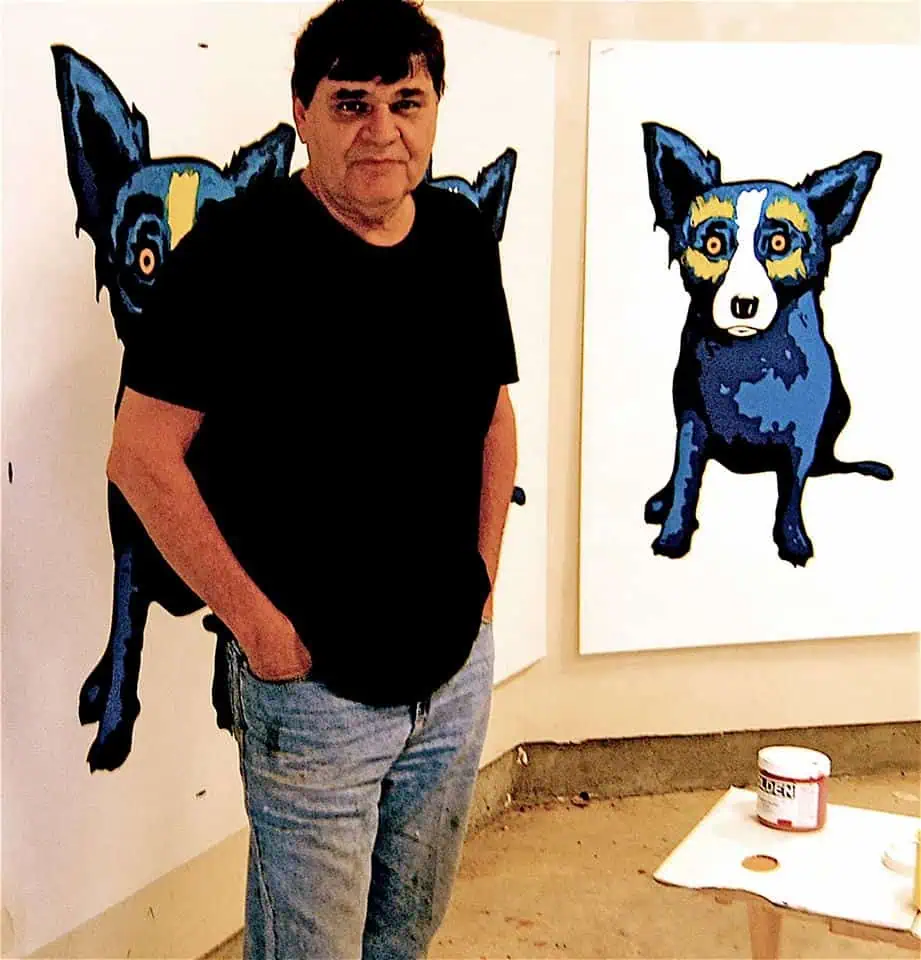
Rodrigue’s art studies at the University of Louisiana at Lafayette and the Art Center College of Design in Los Angeles spawned one of the greatest success stories in American art. In the early 1990s, his Blue Dog Series, based on the French-Cajun loup-garou legend, catapulted him to worldwide fame, while his dark Renaissance-like landscapes developed into robust modern masterpieces.
Learn more by exploring: