

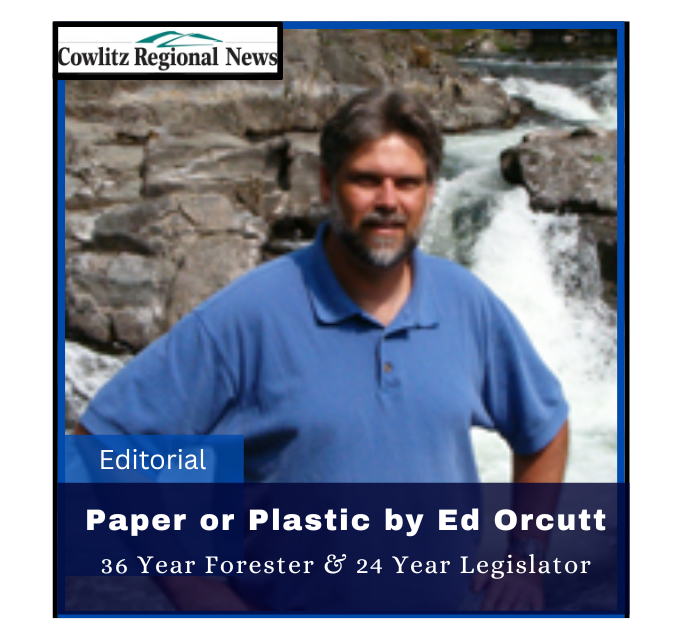
A Special Guest Editorial from a Forester & Legislator
Ever heard anyone say “Choose plastic – save a tree” or “Save a tree – use paperless billing”?
Makes me cringe every time I hear it or see it on a monthly bill. I am quick to explain that in the timber industry, we don’t cut trees to make paper – we cut trees to make lumber. Paper is made from the waste products of the lumber manufacturing process.
Plastic bags were supposed to save the environment. Those of us in the timber industry told the environmentalists pushing for plastic over paper that paper was better for the environment. But their line sounded good, so the public chose plastic. Now, we hear that plastic is a problem. First, we heard that the problem was litter — that bags were flying all over the landscape and into the ocean…now we’re told that microplastics are everywhere. So, we must now ban the very plastic bags that were supposed to save the planet.
In 2020, the legislature banned certain thinner plastic bags and mandated that retailers start charging for thicker plastic bags…but, they also mandated charges for paper bags…? The legislature even mandated that the fee be 8 cents per bag – starting out (plastic bag charge goes to 12 cents Jan 2026). And guess what else? The legislature also applied sales tax to the mandatory fee for the bag!
For years, forest product professionals have been telling policymakers that growing and harvesting timber is good for the environment. And when environmentalists raised alarm bells over carbon dioxide, again we told them – and showed them- that growing and harvesting of trees is a solution to their environmental concern. They seem to adopt about half of that equation – they liked the growing part…. But harvesting? Same old story…they’re not so keen on harvesting trees.
They are happy to grow them, but don’t want to cut them. They want to “save” the trees to store carbon. The problem is, without the harvest component, the sequestration component of growing timber will diminish rapidly over time. As tree growth slows, so too does carbon sequestration. As we have told them, if we grow and harvest trees, we store carbon in wood products, then begin sequestering carbon in a new stand of timber. When we harvest the second stand, carbon will again be stored in the wood products produced, and a new stand of timber will begin to sequester more carbon… all while the carbon from the first two stands remains stored in the wood products those stands produced. And all three stands sustained rapid growth…vigorous trees sequestering large amounts of carbon.

But if that original stand were allowed to grow rather than be harvested, carbon sequestration would slow. As a stand ages and approaches old growth, trees will die and decay. It won’t take long until the stand loses as much stored carbon to decay as it sequesters from the growth of remaining trees. When the stand reaches this equilibrium between growth and decay, there is no longer any net sequestration.
There are two things happening in our state currently that threaten to push us to lower growth and no-net-sequestration, and which will have financial consequences as well.
First, the Commissioner of Public Lands is setting aside 77,000 acres of timber for this type of reservation. 77,000 acres that are currently providing net sequestration benefits – as well as non-tax revenue to build schools and other infrastructure — will no longer do either. Under the guise of environmental benefit, their action will actually do the opposite – it will reduce carbon sequestration, thus reducing the environmental benefits they claim they want. In the process, they will cost taxpayers more money.
Cost taxpayers more? How? Currently, some of the state trust timber provides money for school construction. The continuing need to construct new schools will still demand funding, but with fewer non-tax dollars due to reduced DNR harvests – along with ever-increasing construction costs — the only remaining source of funding is the taxpayer…on their (your) property tax bills.
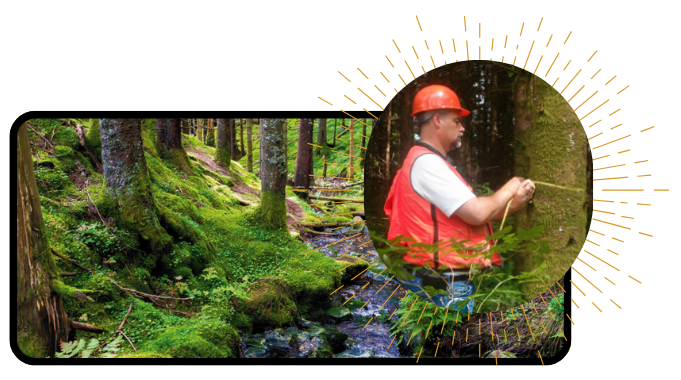
The second concern is the Np Stream rule adopted on November 12, 2025. These are non-fish perennial streams. They have no fish, even though they flow year-round, though most commonly flow into a fish-bearing (type F) stream.
The Department of Ecology (ECY) has recently claimed that the water quality is degraded in these streams under the current Np stream protections. But these protections went through a rigorous process for development and approval and were found to be adequate for protecting water temperature in these streams – and the fish-bearing waters into which they flow.
I was not yet in the legislature when the Forest & Fish law was passed, though I was practicing forestry. I was, however, in the legislature when the federal and state agencies signed the Forest & Fish Habitat Conservation Plan into law in the mid-2000s – and I was at Ken Miller’s tree farm in Thurston County to witness the agencies signing the agreement.
The agreement provided wider stream buffers needed to protect several species of fish, which had been listed as threatened under the Endangered Species Act. It was a 50-year agreement that would provide certainty to landowners that application of these rules would protect them from incidental take of a listed species, thus deeming their harvests to be allowable under the ESA.
But 25 years into a 50-year agreement, Ecology seeks to triple the buffer requirements. Why? Because there has been a slight increase in temperature in these waters – 3/10 of a degree C. Is it an increase that threatens fish or that is greater than allowed for in the Forest and Fish HCP? No. No harm to fish. This temperature increase is minor and keeps stream temperatures well within the range needed for fish habitat.

This overzealousness by Ecology threatens to remove 200,000 acres of land from working forests – a few acres at a time. But it comes at a cost. As noted above, timber locked up reduces overall carbon sequestration that the environmentalists all claim to want. Moreover, it costs landowners huge amounts in lost timber revenue – unless the State reimburses them for the lost revenue. That would strain budgets by $250,000,000 or more over the next few decades…budgets that are already strained. Even if landowners are compensated for unharvested timber due to wider and longer buffers, there are operational costs that can’t be recovered (more road construction and more creek crossings). Those are real costs to the landowners – especially the small, non-industrial landowners.
Wider buffers than needed will cost us environmentally and economically. Locking up timber on private lands under the Np rule and locking up state lands mean higher costs for landowners and lower revenues from state trust lands. These actions will have the opposite effect of what the proponents – including our elected Commissioner of Public Lands — claim they want.
We continue to tell them the actual effect, but they ignore the true impacts. It all sounds good, so it’s what they sell to the public to justify their actions.
Plastic bags all over again… Will they ever learn…? Maybe it isn’t about carbon sequestration — maybe their actual goal is just to lock up timber…
About Ed Orcutt
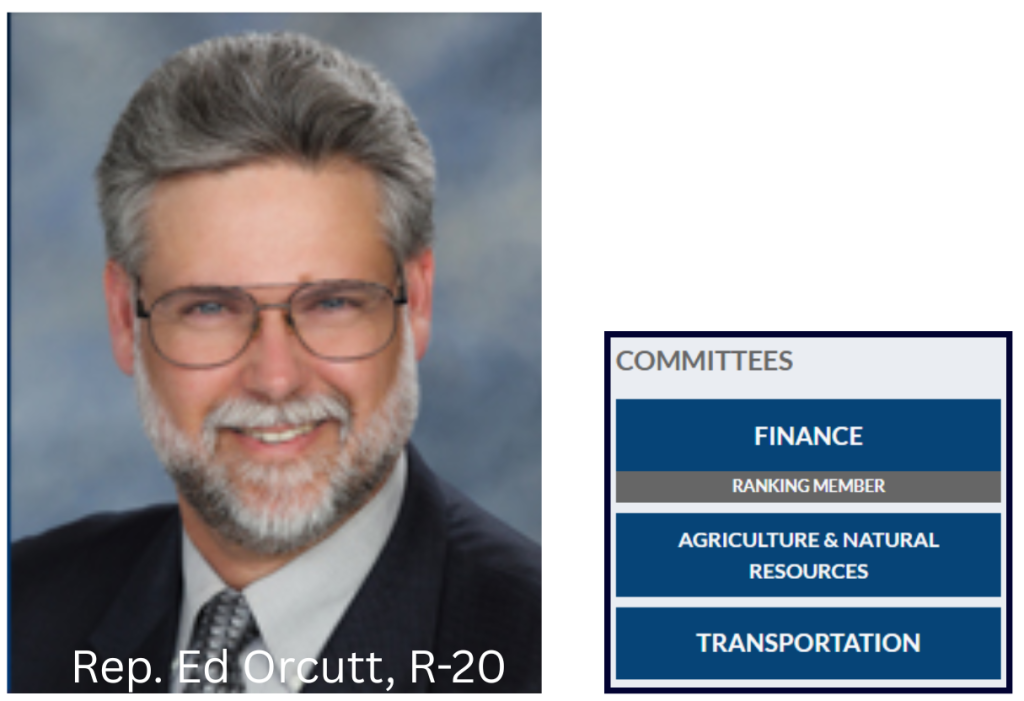
Ed is a leader in protecting our natural resource industries and quality of life. He has been a consulting forester for 36 years – 16 of those years as the owner of Cascade Forest Management.
Ed was appointed to the Washington State House of Representatives in 2002. From 2002 to 2013, he represented the 18th District. Due to redistricting, he went on to represent the 20th District and is serving his twelfth term as state representative.
In his 24 years in the Washington State House of Representatives, he has remained dedicated to creating jobs, protecting taxpayers, and advocating for policies that benefit families and communities.
He is a strong voice for a more effective and accountable state government that works for – not against – property owners and employers.
An active volunteer even before he was elected to serve, Ed is a past president of the Lions Club and is currently a member of the Kalama Lions.
He has served as past chairman of the Highlander Festival, a member of the Columbia Theatre Board, and as a youth bowling coach.
After earning his B.S. in Forest Management from the University of Idaho, Ed has made his living as a forestry consultant since 1990 and has owned his own consulting company since 2009.
Ed and his wife, Marcie, have been married since 1996, and they make their home in Kalama, Washington.


Exactly correct, Great article!!